Global Threads: What Kumihimo Tech Camp Taught Us About Innovation
"Lessons from the second edition of Kumihimo Tech Camp in Bulgaria and what it reveals about making innovation real, collaborative, and ready to ship."
There is a quiet wisdom in crafts that have survived centuries. Not because they resisted change, but because they understood structure.
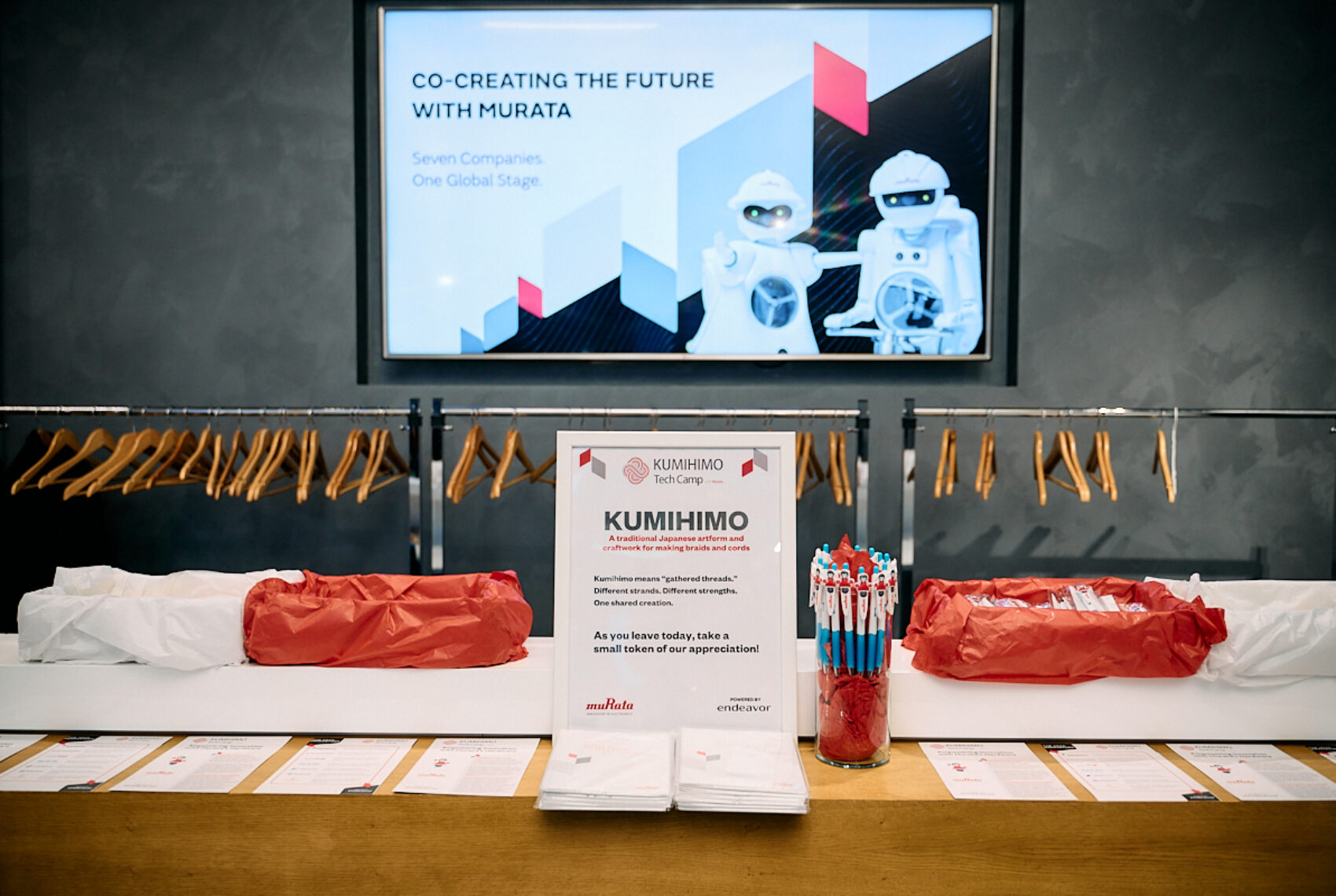
In traditional Kumihimo, the Japanese art of braiding cords, strength doesn’t come from a single thread. It comes from the way different threads are brought together, each with its own tension, color, and role, into something that can actually be used. Something that holds.
Innovation works much the same way.
Yet in modern technology ecosystems, the threads of innovation are often kept separate. Startups, corporations, and ecosystems each operate with their own strengths, incentives, and timelines. When these threads fail to connect, promising technologies remain fragile, impressive in isolation, but unable to hold in the real world.
Today, technology touches almost every part of our lives: how we move, how we heal, how we produce energy, how we feed a growing population. Yet despite breathtaking advances, many promising ideas never make it beyond the prototype stage. They remain impressive but fragile. Brilliant but isolated. Which raises a simple but uncomfortable question: Why is it still so hard for innovation to leave the lab and survive the real world?
The Innovation Paradox
Part of the answer lies in what innovation scholar Clayton Christensen described as the innovation paradox.
Established companies are exceptionally good at sustaining innovation, making existing products better, faster, cheaper, and more reliable. These improvements are measurable, predictable, and aligned with current customers and revenue models.
But disruptive innovation, the kind that opens new markets or reshapes existing ones, often starts small, looks imperfect, and doesn’t fit neatly into existing systems.
The paradox is this: the very structures that make large organizations excellent at execution can also make them slower, or even resistant, to exploring unfamiliar paths.
Startups, on the other hand, live at the edge. They move fast, question assumptions, and build what doesn’t yet exist. But they often lack access to industrial-grade components, global supply chains, regulatory insight, or the feedback loops that come from decades of manufacturing experience.
In other words, exploration and execution rarely live in the same place.
Which leads to a practical question: if neither large organizations nor startups can solve this alone, how should innovation actually be organized?
Open Innovation, Explained
This is where the idea of open innovation enters the picture.
“Open innovation” is one of those phrases that sounds more complicated than it needs to be.
At its core, it simply means this: no single organization, no matter how large, experienced, or well-funded, can solve complex problems alone anymore.
For large companies, open innovation means the willingness to look beyond internal R&D and collaborate with external teams who see the world differently.
For startups, it means recognizing that speed alone is not enough. Building meaningful technology also requires reliability, scale, and exposure to real-world constraints.
In practice, open innovation is not a slogan or a press release. It is shared work, shared learning, and often shared discomfort.
But collaboration alone is not enough. For open innovation to work, it needs structure. Without clearly defined roles and incentives, partnerships remain superficial and promising experiments rarely move beyond conversation.
A Three-Thread Model
In many ways, the structure resembles the logic of Kumihimo itself: different threads, each carrying its own strength, braided together into something functional.
One of the clearest lessons from the second edition of Kumihimo Tech Camp is that addressing the innovation paradox requires three distinct but complementary roles.
- Global industrial leaders, like Murata Manufacturing, bring deep engineering expertise, reliability standards, and a clear understanding of what it takes to manufacture technology at scale.
- Ecosystem builders, like Endeavor, curate trust, identify the right teams, and create the conditions for meaningful collaboration.
- Deep-tech companies bring invention, ambition, and the willingness to build where uncertainty is highest.
When these three roles work together, not sequentially, but in parallel, innovation stops being theoretical. It becomes testable. And eventually, shippable.
Kumihimo Tech Camp was designed precisely around this logic.
Kumihimo Tech Camp: The Vehicle, Not the Theory
Kumihimo Tech Camp was created by Murata Manufacturing in Japan as a practical way to operationalize this model.
The goal was never to run a traditional accelerator, but to create a focused environment where co-creation between engineers, founders, and ecosystem leaders could actually happen.
Bulgaria became the first country outside Japan to host the initiative, and in 2025 it did so for the second consecutive year.
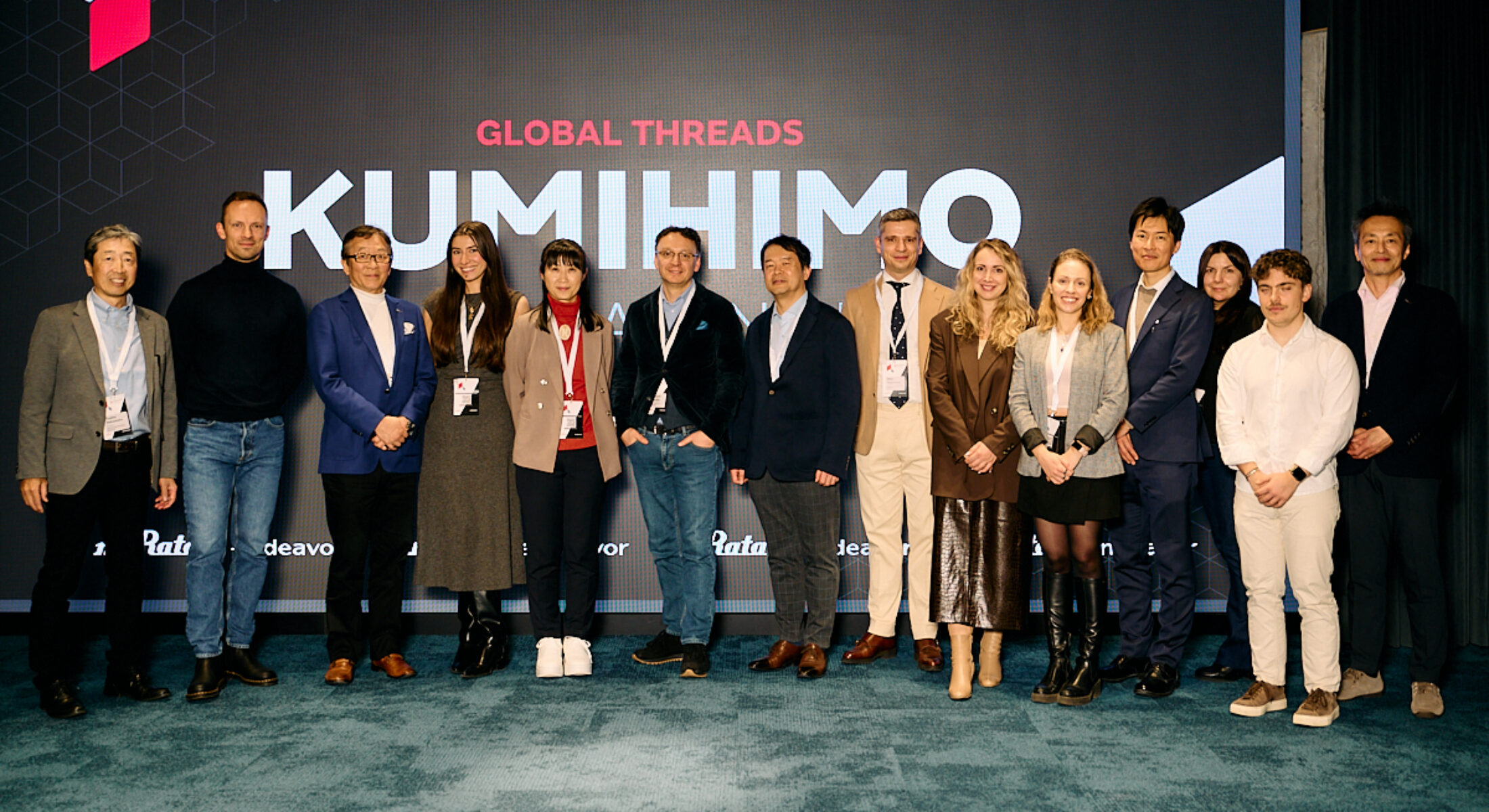
Powered by Endeavor Bulgaria, the initiative brought together Murata’s global engineering expertise and Bulgaria’s growing deep-tech ecosystem through a carefully designed process.
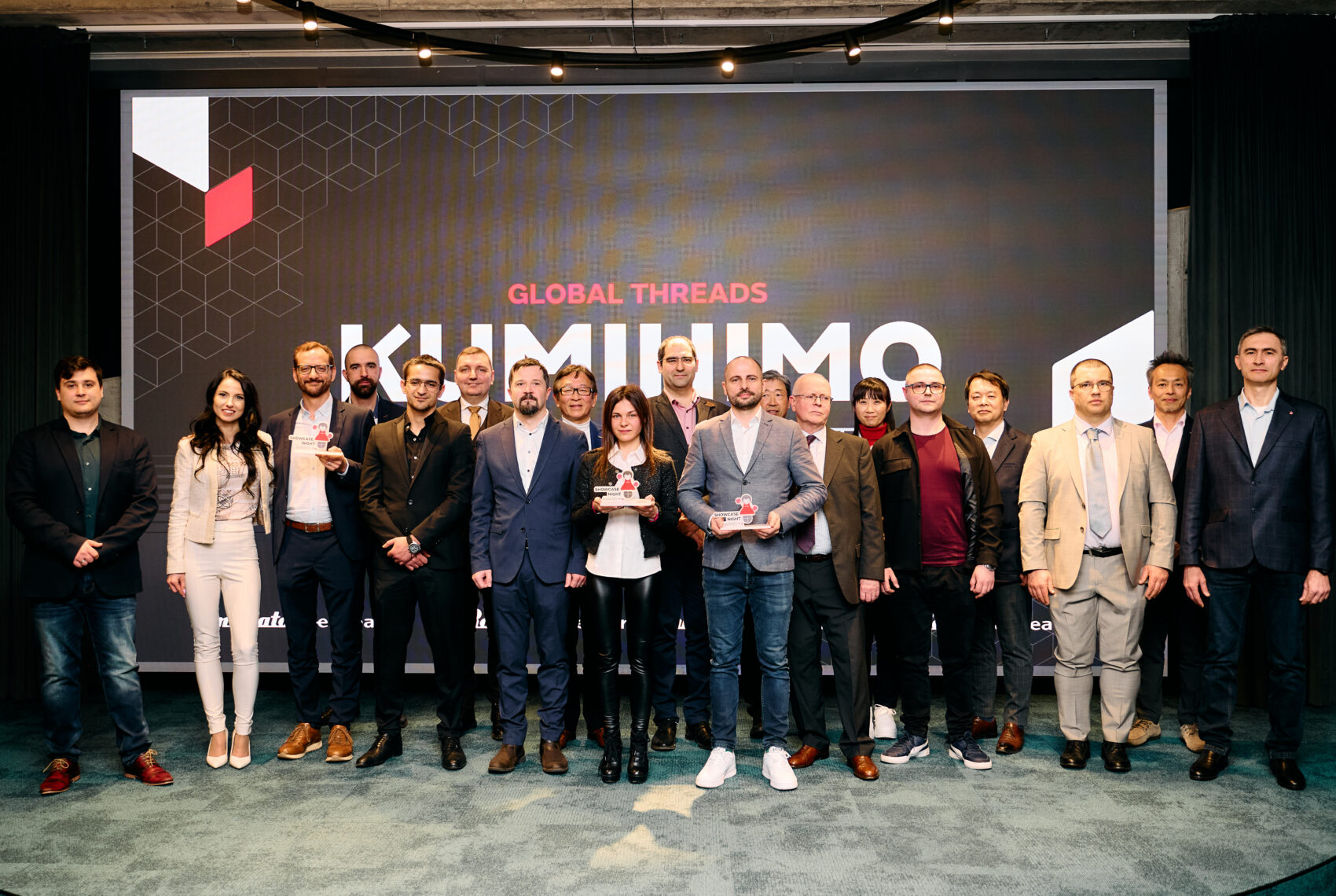
Hundreds of companies were reviewed. Seven Bulgarian hardware and deep-tech teams were selected. These teams worked closely with Murata engineers, gaining access to components, feedback, and real industrial constraints.
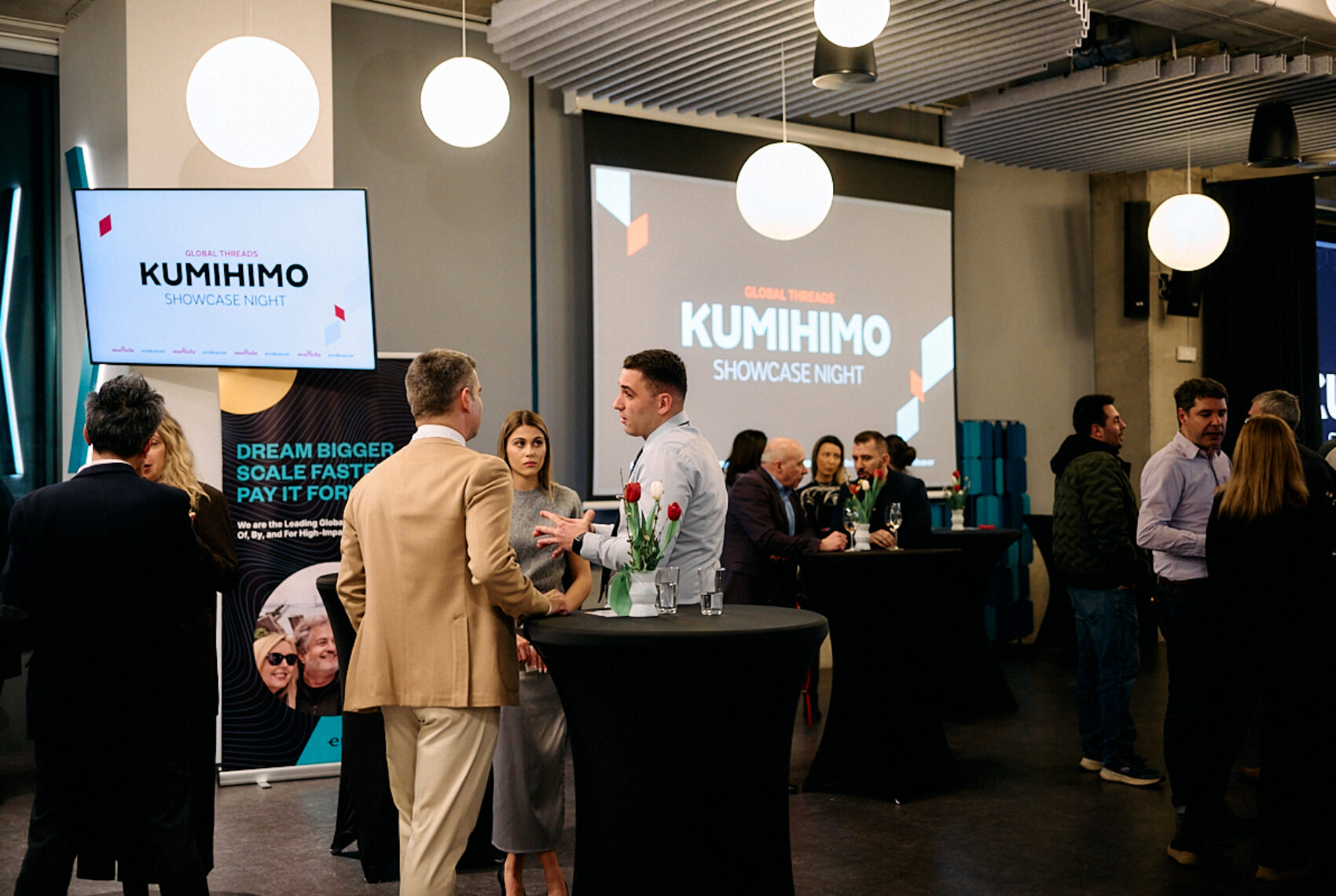
The journey culminated in a closed-door Showcase Session, where teams presented directly to Murata’s senior leadership. This was not a demo day for applause. It was a working session for decisions.
Seven Teams, Seven Proof Points
The real test of this model is whether it can support technologies that must operate in demanding real-world environments. One of the most striking outcomes of Kumihimo Tech Camp is how diverse the participating teams were, yet how consistent the underlying pattern became.
- Neuromorphica is developing EU-sovereign neuromorphic AI chips designed for energy-efficient edge AI and autonomous systems.
- ProsFit is rethinking prosthetic care through digital, distributed models that deliver personalized mobility solutions.
- Tsarina Wine combines hardware, IoT, and AI to bring precision and data-driven decision-making into fermentation and winemaking.
- Simobotics builds modular, AI-powered robots for logistics and industrial automation.
- Nasekomo works on scalable insect bioconversion systems for sustainable food, feed, and fertilizers.
- Re4Life Healthcare Technologies develops medical robotics and exoskeletons aimed at rehabilitation and assistive care.
- Solumar creates advanced filtration technologies targeting emissions and environmental pollution.
Different sectors. Different use cases. But the same underlying challenge: how to make advanced technology work reliably in the real world.
Recognition as a Signal, Not a Finish Line
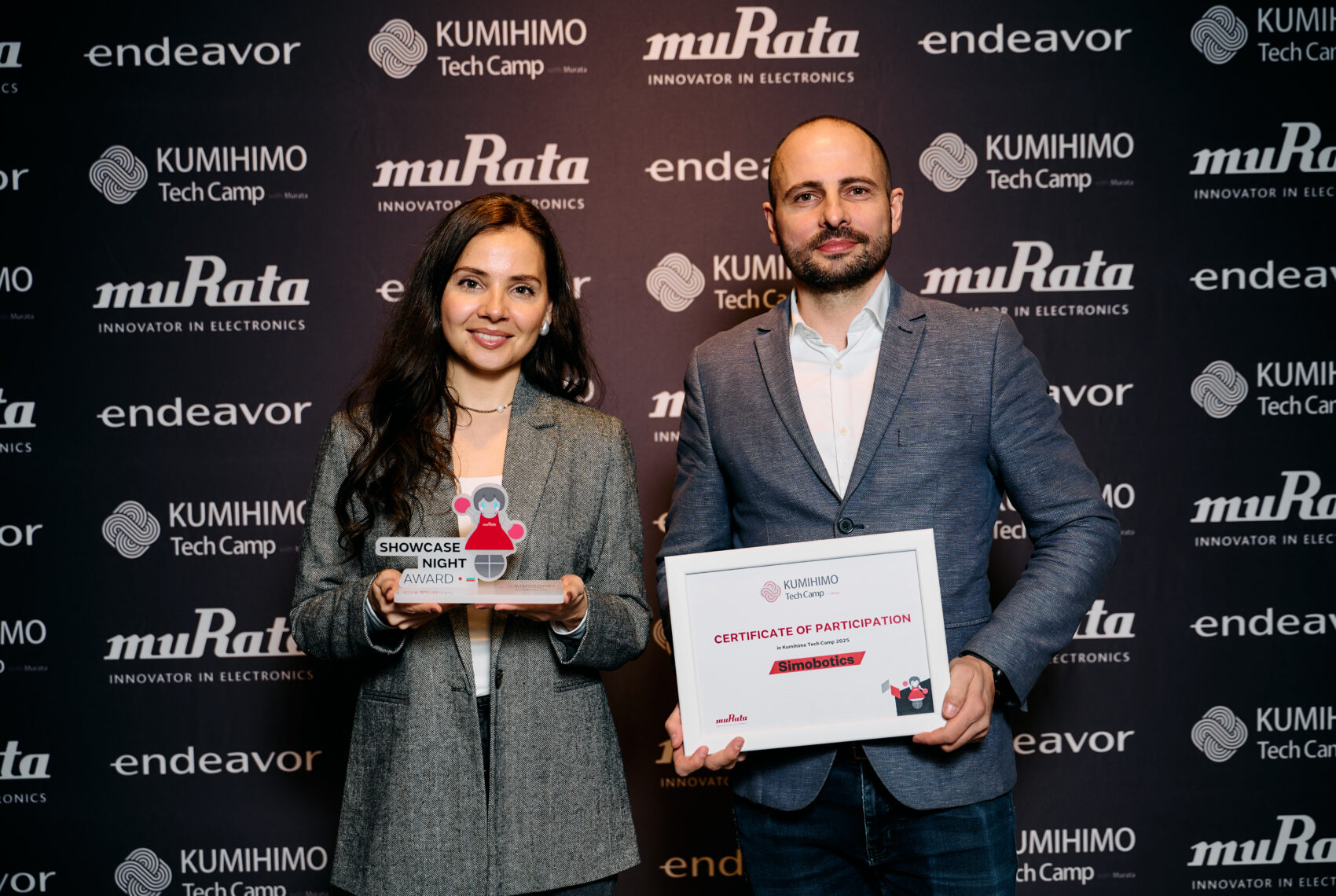
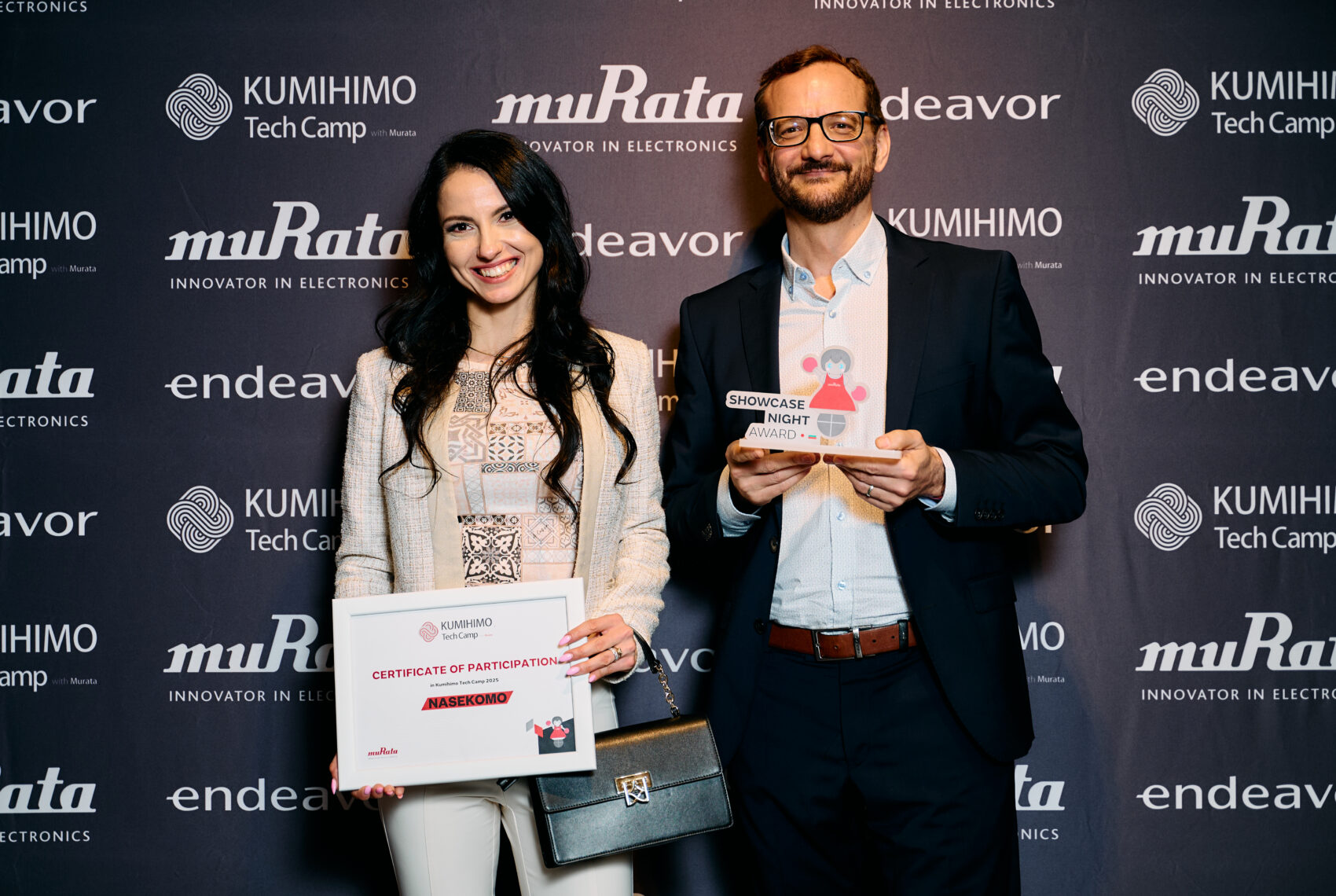
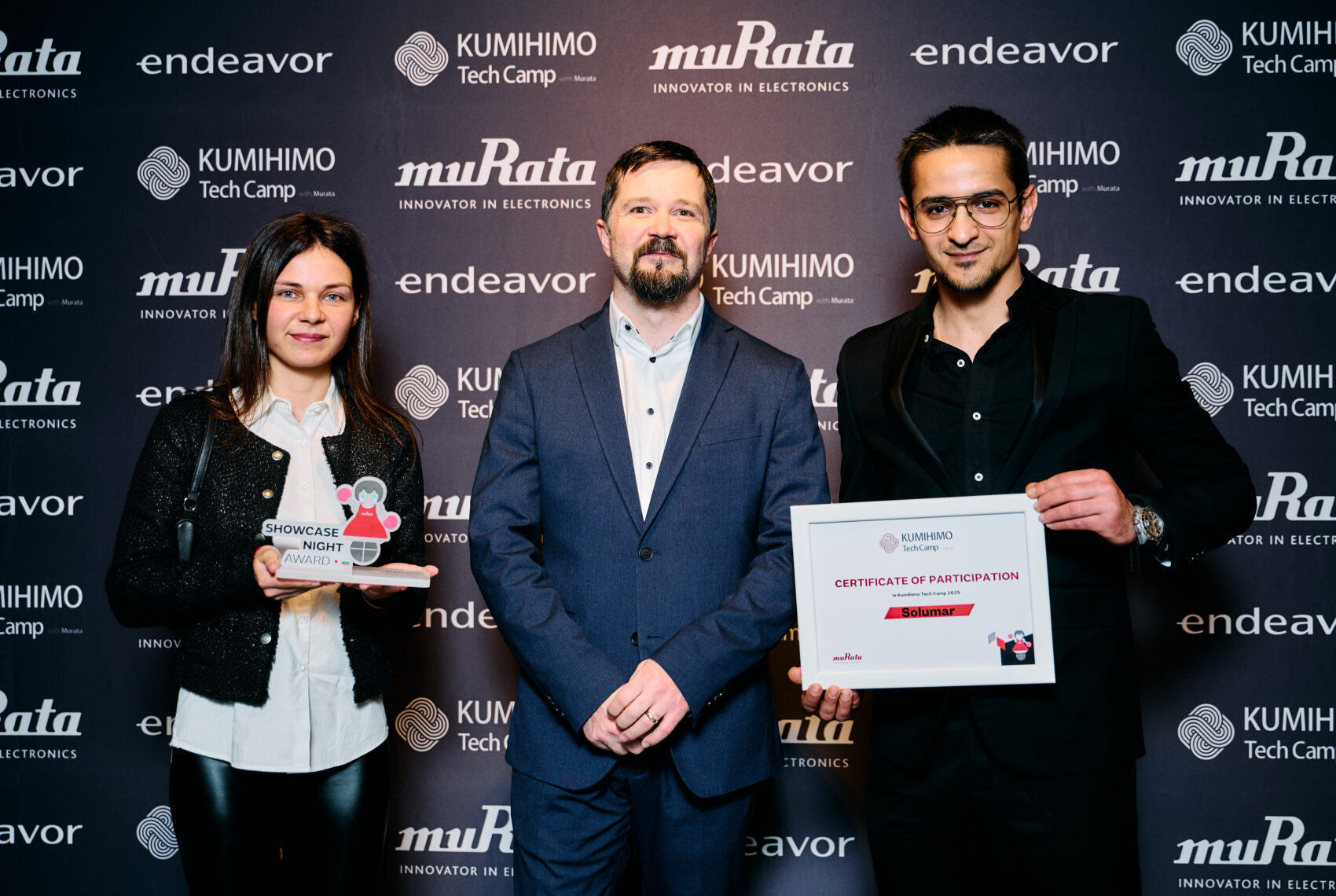
Following the Showcase Session, three teams – Simobotics, Nasekomo, and Solumar – were selected to continue the next phase of collaboration with Murata.
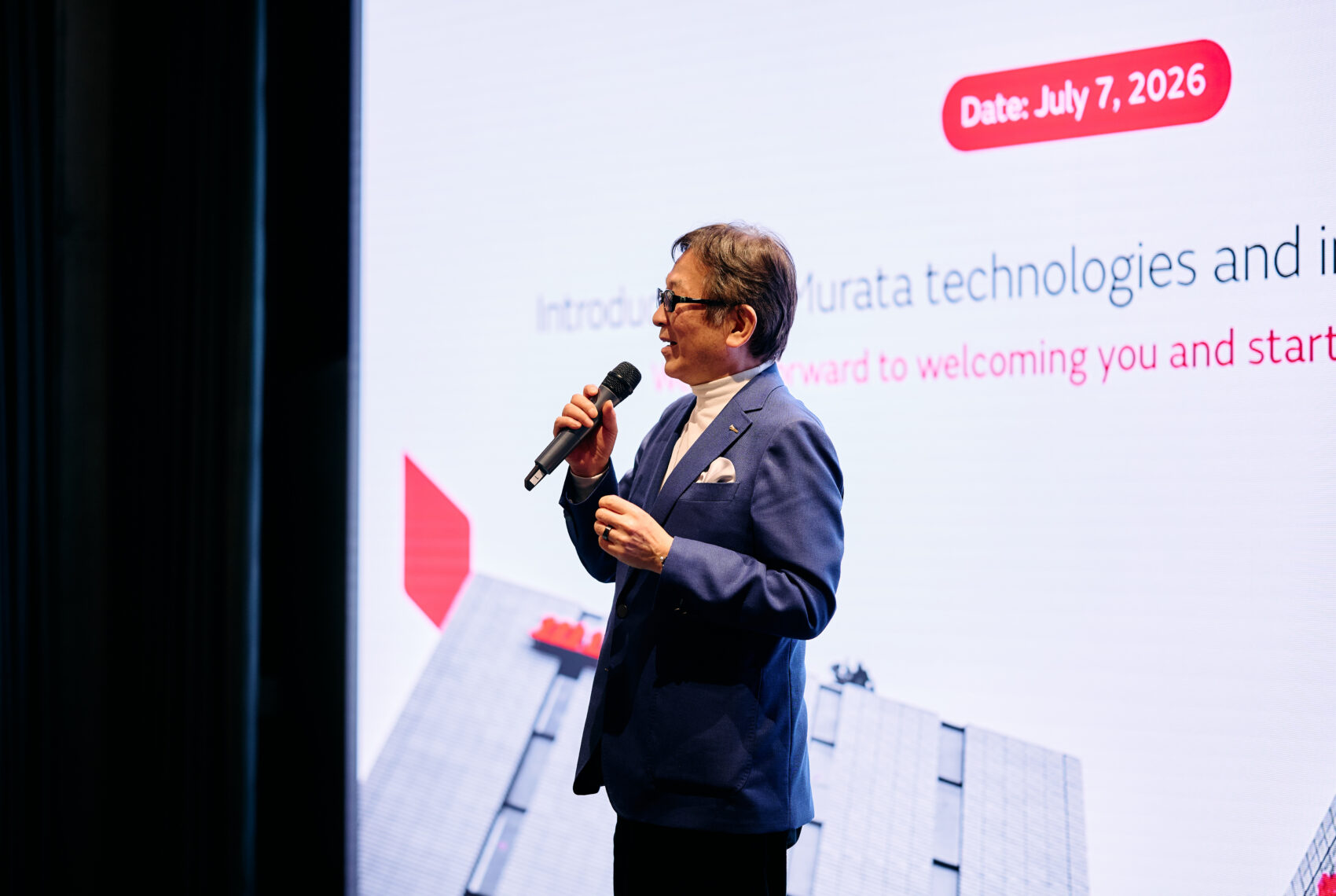
These teams will visit Murata’s global headquarters in Kyoto, Japan, where they will present their solutions at the official Award Ceremony in July 2026 and explore further co-creation opportunities.
But recognition in Kumihimo is not about ranking ideas. It is about identifying readiness for collaboration: technical maturity, openness to iteration, and alignment with real industrial needs.
All seven teams earned something equally valuable – insight into what it truly takes to build technology that can scale.
What Each Partner Gains
The results of Kumihimo Tech Camp are best understood not as outputs, but as learning loops.
For Murata, the initiative is a chance to work closely with ambitious deep-tech founders and explore where new technologies could lead.
For Endeavor, it offers a rare window into Bulgaria’s emerging deep-tech talent and ideas.
For the participating teams, it means honest engineering feedback, exposure to real industrial constraints, and the possibility of building something bigger together.
Braiding the Threads Forward
If there is one lesson to carry forward from the second edition of Kumihimo Tech Camp, it is this:
Innovation rarely fails because of a lack of ideas. More often, it fails because the threads remain separate.
When global manufacturers, ecosystem builders, and deep-tech founders braid their strengths together, something different happens. Technology becomes sturdier. Learning accelerates. And innovation has a real chance to ship.
Kumihimo is not just an open innovation initiative. It is a reminder that the future of innovation belongs to those willing to build together.